
 Physiques DatabasePhysiques DatabasePhysiques DatabasePhysiques Database
American actress and singer - Instagram Profile
Hilary Duff was one of the defining teen stars of the early 2000s: as the title character of Disney Channel's Lizzie McGuire she became a household name, then took the character to cinemas in The Lizzie McGuire Movie (2003). The same year her album Metamorphosis climbed to number one on the Billboard 200. As an adult she found a second long-running hit in Younger (2015–2021), playing the young editor Kelsey Peters, and later led How I Met Your Father.
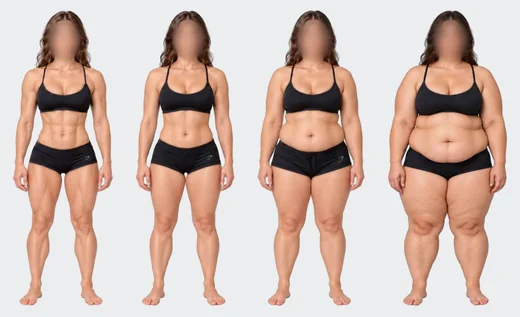
This scan records about 59 kg at 155 cm, with body fat around 33%. She is petite, and her estimate sits close to the average for women: an everyday composition, typical of a career built on comedy and drama rather than on action roles.
Loading…
A visual estimation of the areas of your body with a higher likelihood of containing more fat than others -- not a measurement. This feature is experimental; treat the heatmap as an indication, not a clinical finding. Accuracy is best at the extremes of body-fat percentage, weaker in the middle, and atypical body shapes (athletic builds, pregnancy, etc.) may not be modelled well.
| Metric | Value vs reference | Reference | Reading |
|---|---|---|---|
| Lateral lean?Accurate to about ±2-3° in a single scan -- camera tilt is the main confounder. Trending against your own history (same setup) is more reliable than the absolute number. For best accuracy, make sure the camera was level while scanning. | -0.3° | 0° = vertical (frontal knees-to-head axis) | natural — upright |
| Head forward offset?Accurate to about ±1-2 cm in a single scan -- camera tilt and head rotation (looking up / down / sideways) are the main confounders. Trending against your own history (same setup) is more reliable than the absolute number. For best accuracy, look straight ahead and keep the camera level while scanning. | Upload a side picture to get this metric | 0 = ear in line with the spine axis (no forward head) | — |
| Forward/back lean?Accurate to about ±2-3° in a single scan -- camera tilt is the main confounder. Trending against your own history (same setup) is more reliable than the absolute number. For best accuracy, make sure the camera was level while scanning. | Upload a side picture to get this metric | 0° = vertical (side knees-to-head axis) | — |
| Shoulder tilt?Accurate to about ±2-3° in a single scan -- camera tilt is the main confounder. Trending against your own history (same setup) is more reliable than the absolute number. For best accuracy, make sure the camera was level while scanning. | -1.2° | 0° = level (frontal) | natural — balanced |
| Hip tilt?Accurate to about ±2-3° in a single scan -- camera tilt is the main confounder. Trending against your own history (same setup) is more reliable than the absolute number. For best accuracy, make sure the camera was level while scanning. | -2.0° | 0° = level (frontal) | natural — left hip low |
| Segment | Left width | Right width | Δ vs symmetric | Reading |
|---|---|---|---|---|
| Upper arm Biceps / triceps | 7.6 cm | 7.5 cm | +1.6% | natural — balanced |
| Forearm Forearm flexors | 6.4 cm | 6.8 cm | -6.5% | natural — right side larger |
| Thigh Quadriceps | 29.2 cm | 14.9 cm | +64.8% | significant — left side largerlow confidenceA single front-facing photo can't tell a genuinely larger limb from one simply rotated toward the camera, and small limbs like the forearm swing a lot — so a large difference here is more likely a measurement artifact than a real asymmetry. A full-body scan (front + back) averages this out and is far more reliable. |
BodyWHAT uses its own proprietary, neural-network-based technology to estimate your body-fat percentage and other body-composition metrics directly from your photos. These in-house models are combined with established anthropometric methods; the published methods and reference ranges below inform and calibrate those estimates.
BodyWHAT's figures are estimates for general fitness and education — not medical advice or a diagnosis. They draw on established methods and published reference ranges:
Always consult a qualified healthcare professional before making decisions about your health.
Processed in 20.8 seconds