
 Physiques DatabasePhysiques DatabasePhysiques DatabasePhysiques Database
British singer and actress - Instagram Profile
Lily Allen found her audience on MySpace, where the demos she posted in the mid-2000s led to "Smile", a UK number one in 2006, and the debut album Alright, Still. "The Fear" gave her a second chart-topper in 2009, and her sharp, conversational lyrics have stayed her signature ever since, through to West End Girl in 2025. She has also built a stage career: her West End debut in 2:22 A Ghost Story won her a WhatsOnStage Award and an Olivier nomination for Best Actress.
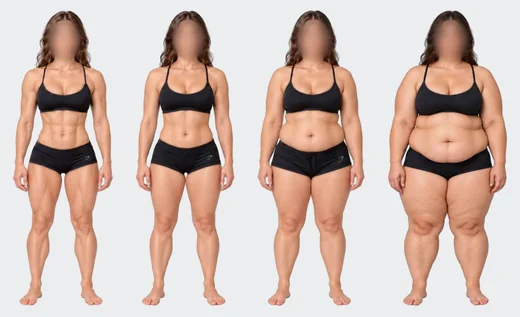
This scan shows a small frame, 157.5 cm and about 56 kg, with body fat around 28%. That falls within the typical range for women, and it suits a performer whose shows have always rested on the songs and the delivery rather than on athletic dance routines.
Loading…
A visual estimation of the areas of your body with a higher likelihood of containing more fat than others -- not a measurement. This feature is experimental; treat the heatmap as an indication, not a clinical finding. Accuracy is best at the extremes of body-fat percentage, weaker in the middle, and atypical body shapes (athletic builds, pregnancy, etc.) may not be modelled well.
| Metric | Value vs reference | Reference | Reading |
|---|---|---|---|
| Lateral lean?Accurate to about ±2-3° in a single scan -- camera tilt is the main confounder. Trending against your own history (same setup) is more reliable than the absolute number. For best accuracy, make sure the camera was level while scanning. | +0.0° | 0° = vertical (frontal knees-to-head axis) | natural — upright |
| Head forward offset?Accurate to about ±1-2 cm in a single scan -- camera tilt and head rotation (looking up / down / sideways) are the main confounders. Trending against your own history (same setup) is more reliable than the absolute number. For best accuracy, look straight ahead and keep the camera level while scanning. | Upload a side picture to get this metric | 0 = ear in line with the spine axis (no forward head) | — |
| Forward/back lean?Accurate to about ±2-3° in a single scan -- camera tilt is the main confounder. Trending against your own history (same setup) is more reliable than the absolute number. For best accuracy, make sure the camera was level while scanning. | Upload a side picture to get this metric | 0° = vertical (side knees-to-head axis) | — |
| Shoulder tilt?Accurate to about ±2-3° in a single scan -- camera tilt is the main confounder. Trending against your own history (same setup) is more reliable than the absolute number. For best accuracy, make sure the camera was level while scanning. | +0.3° | 0° = level (frontal) | natural — balanced |
| Hip tilt?Accurate to about ±2-3° in a single scan -- camera tilt is the main confounder. Trending against your own history (same setup) is more reliable than the absolute number. For best accuracy, make sure the camera was level while scanning. | -0.4° | 0° = level (frontal) | natural — balanced |
| Segment | Left width | Right width | Δ vs symmetric | Reading |
|---|---|---|---|---|
| Upper arm Biceps / triceps | 6.5 cm | 6.3 cm | +2.8% | natural — balanced |
| Forearm Forearm flexors | 5.9 cm | 5.8 cm | +1.0% | natural — balanced |
| Thigh Quadriceps | 11.9 cm | 12.5 cm | -4.5% | natural — balanced |
BodyWHAT uses its own proprietary, neural-network-based technology to estimate your body-fat percentage and other body-composition metrics directly from your photos. These in-house models are combined with established anthropometric methods; the published methods and reference ranges below inform and calibrate those estimates.
BodyWHAT's figures are estimates for general fitness and education — not medical advice or a diagnosis. They draw on established methods and published reference ranges:
Always consult a qualified healthcare professional before making decisions about your health.
Processed in 18.1 seconds