
 Physiques DatabasePhysiques DatabasePhysiques DatabasePhysiques Database
American actor - Instagram Profile
Verne Troyer's screen career began with a baby: his first job was as the stunt double for the infant star of Baby's Day Out (1994). Five years later he became Mini-Me, the silent, one-eighth-size clone of Dr. Evil in the Austin Powers sequels, a role that made him one of the most recognisable comic actors of his era. He also played the goblin Griphook on screen in Harry Potter and the Philosopher's Stone. Troyer died in 2018, at 49.
At 81 cm and 24 kg in this scan, he was about the size of a young child, which is precisely what had made those first stunt jobs possible. His body fat, about 36%, reads high against adult male norms, though those ranges are built around adults of average height and are only a rough guide at his scale.
Loading…
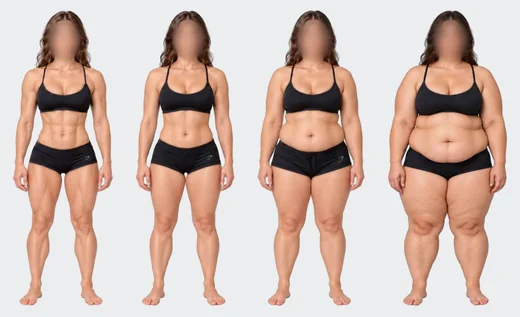
A visual estimation of the areas of your body with a higher likelihood of containing more fat than others -- not a measurement. This feature is experimental; treat the heatmap as an indication, not a clinical finding. Accuracy is best at the extremes of body-fat percentage, weaker in the middle, and atypical body shapes (athletic builds, pregnancy, etc.) may not be modelled well.
| Metric | Value vs reference | Reference | Reading |
|---|---|---|---|
| Lateral lean?Accurate to about ±2-3° in a single scan -- camera tilt is the main confounder. Trending against your own history (same setup) is more reliable than the absolute number. For best accuracy, make sure the camera was level while scanning. | -0.9° | 0° = vertical (frontal knees-to-head axis) | natural — upright |
| Head forward offset?Accurate to about ±1-2 cm in a single scan -- camera tilt and head rotation (looking up / down / sideways) are the main confounders. Trending against your own history (same setup) is more reliable than the absolute number. For best accuracy, look straight ahead and keep the camera level while scanning. | Upload a side picture to get this metric | 0 = ear in line with the spine axis (no forward head) | — |
| Forward/back lean?Accurate to about ±2-3° in a single scan -- camera tilt is the main confounder. Trending against your own history (same setup) is more reliable than the absolute number. For best accuracy, make sure the camera was level while scanning. | Upload a side picture to get this metric | 0° = vertical (side knees-to-head axis) | — |
| Shoulder tilt?Accurate to about ±2-3° in a single scan -- camera tilt is the main confounder. Trending against your own history (same setup) is more reliable than the absolute number. For best accuracy, make sure the camera was level while scanning. | -0.3° | 0° = level (frontal) | natural — balanced |
| Hip tilt?Accurate to about ±2-3° in a single scan -- camera tilt is the main confounder. Trending against your own history (same setup) is more reliable than the absolute number. For best accuracy, make sure the camera was level while scanning. | -3.8° | 0° = level (frontal) | natural — left hip low |
| Segment | Left width | Right width | Δ vs symmetric | Reading |
|---|---|---|---|---|
| Upper arm Biceps / triceps | 5.3 cm | 4.8 cm | +10.5% | natural — left side larger |
| Forearm Forearm flexors | 5.0 cm | 5.5 cm | -9.0% | natural — right side larger |
| Thigh Quadriceps | 8.5 cm | 8.7 cm | -2.5% | natural — balanced |
BodyWHAT uses its own proprietary, neural-network-based technology to estimate your body-fat percentage and other body-composition metrics directly from your photos. These in-house models are combined with established anthropometric methods; the published methods and reference ranges below inform and calibrate those estimates.
BodyWHAT's figures are estimates for general fitness and education — not medical advice or a diagnosis. They draw on established methods and published reference ranges:
Always consult a qualified healthcare professional before making decisions about your health.
Processed in 17.7 seconds